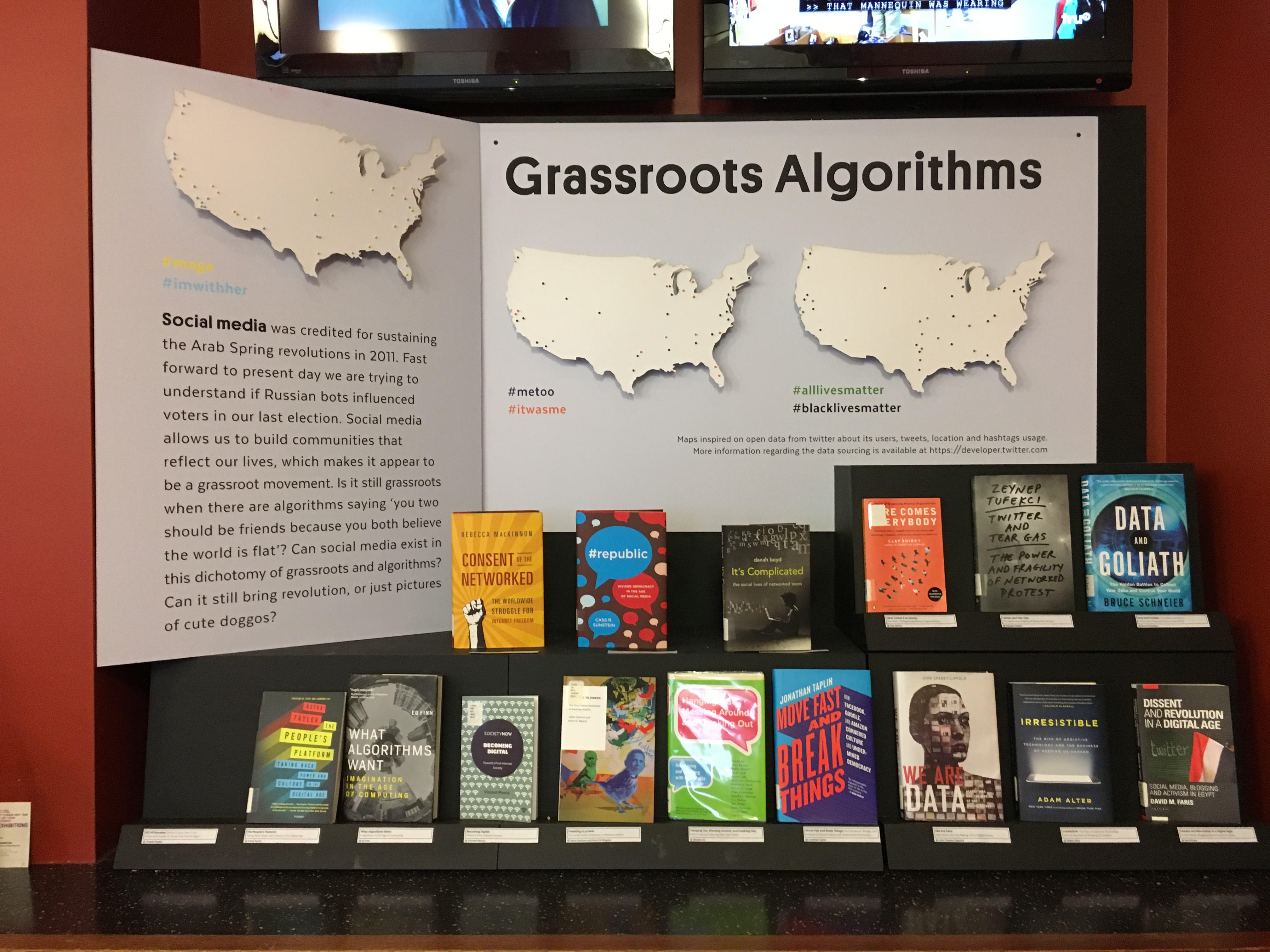
Remember the Arab Spring revolutions in 2011 and the toppling of Hosni Mubarak in Egypt? Social media was credited for helping start and continue those revolutions. Fast forward to present day when Russian bots probably influenced voters in our last presidential election by feeding us false stories that confirmed biases and isolated us in our positions even more. Social media allows us to build communities that reflect our likes and passions which makes it feel like a grassroot movement. But, when there are algorithms saying ‘you two should be friends because you both believe the world is flat’, is that still grassroots?
Can social media exist in this dichotomy of grassroots and algorithms? Is it changing our behavior, or just reflecting actions that we have always manifested? Isn’t it just giving us a way to amplify all of our IRL behaviors? Or are we making smaller and smaller communities that parrot back our beliefs? Can it still bring revolution? Or just pictures of cute doggos?
Blog Post with books selected for display
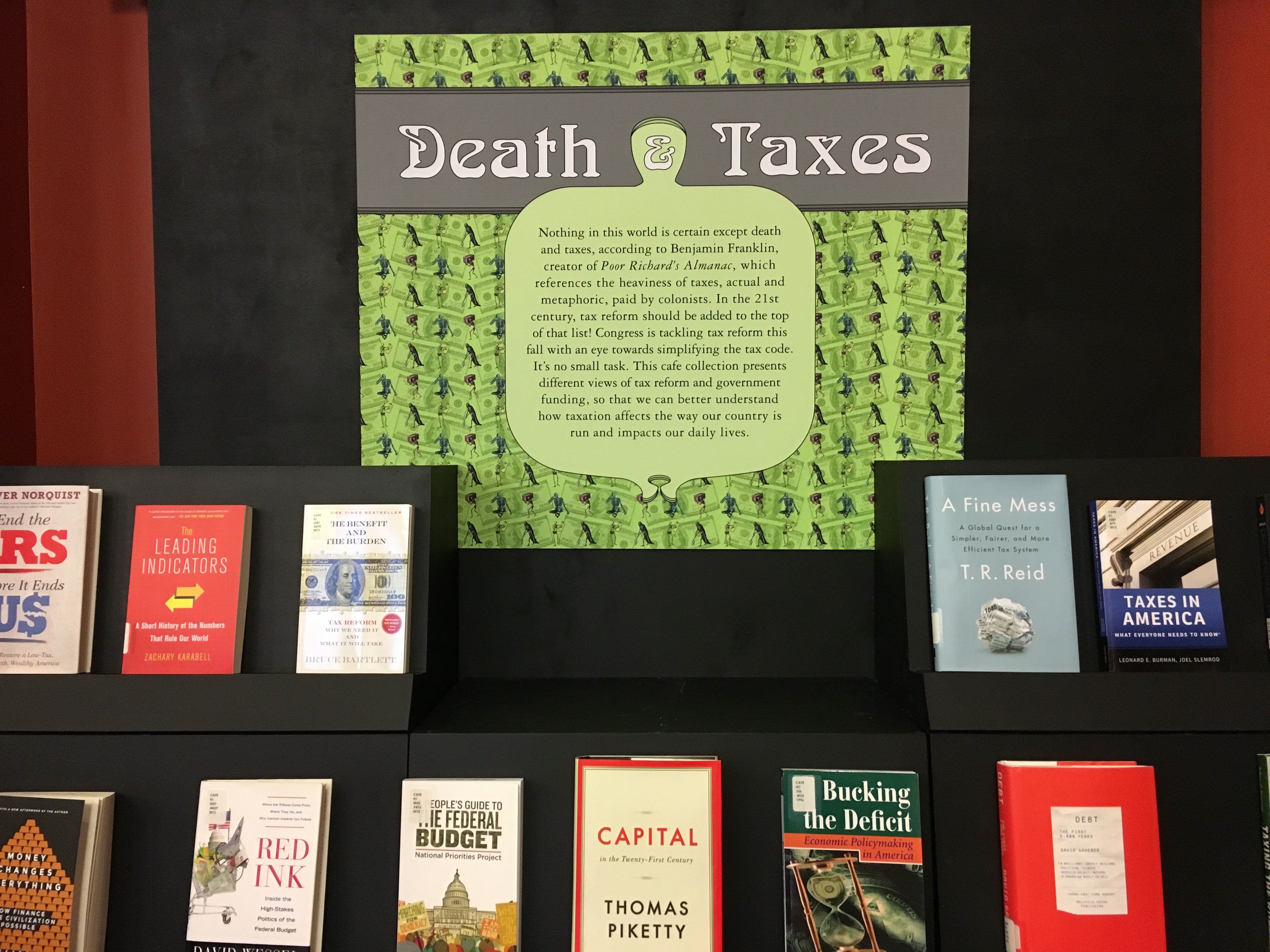
Taxes? Who wants to talk about taxes in September? I can tell you who is going to have to talk a lot about taxes in September – people elected to office in Washington D.C. After that, they will follow up with budget conversations. This is why we have decided to focus our next Cafe Collection on understanding taxes and funding.
The current tax reform appears to be focused on reform for corporations. But why should we care if the corporate tax rate is 35% vs 15%? Maybe we should just make the tax code as simple as possible.
How about no taxes? Well, that doesn’t work very well either as proven by Kansas. They recently ended their experiment with no taxes. It was not what some might call successful but it didn’t improve the state’s economy and led to budget shortfalls. Whereas D.C. took a more comprehensive approach and added taxation to some industries, cut the sales tax, and had economic growth.
The push for the current tax reform is to make sure the cuts don’t add to the budget deficit. It is easy to flip that and say with these tax cuts, we also need to cut these programs to balance the budget. This could set off more gridlock in Washington, D.C.
Blog Post with books selected for display
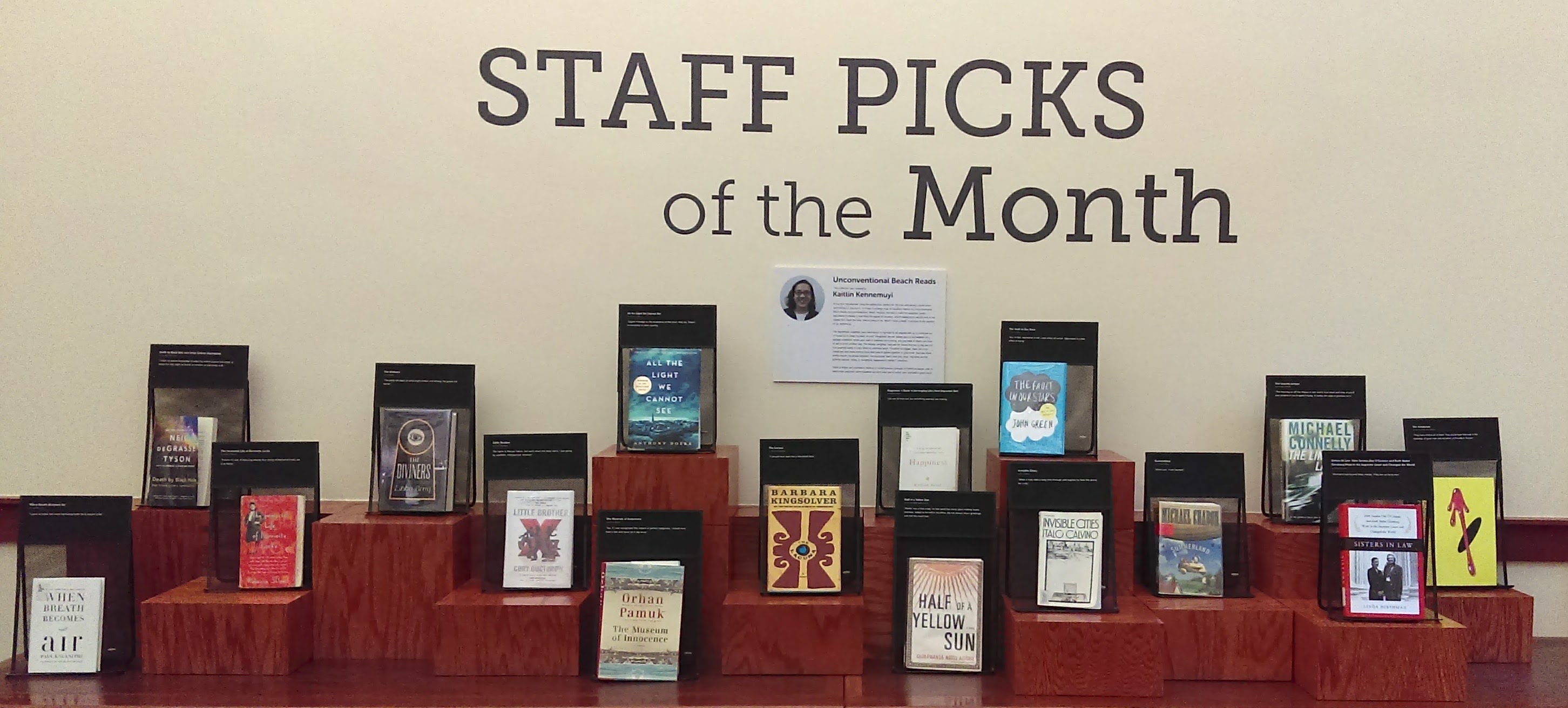
In my non-vacation life I read the lighter fare, the pulpier the fiction the better. I find it is perfect for the train and taking a break when work/school is too much. Which means I have to change it up on vacation. Hence my Unconventional Beach Reads Staff Picks for July/August. When I head to the beach I take the weightier books – figuratively & literally (I read Atlas Shrugged on vacation, which makes most people look at me askew) But I have the time, and no place to be. When I need a break, I can stare at the horizon or go swimming.
The figuratively weightier ones need space in my brain to be argued with, or to ruminate on, or to just try to wrap my head around. Things that are not always easy to accomplish on a subway commute, when your train is suddenly not running, and you have to figure out how to get to work another way. The literally weightier ones are the books that are so big you will hurt yourself trying to carry them to and from work. The plots are bigger, there are more characters and more intersections that have to jigsaw together in your brain. Basically these books require my actual attention not my partial “don’t miss your stop…hey what are the subway dancers doing…is something happened on twitter?” attention.
For some of these books I can tell you exactly what beach I was on, some I hope to read on the beach this summer. In a funny way when I come across the ones I have read, it takes me back to that beach.
There is fiction and nonfiction – biology to social science, dystopia to historical events, cells to black holes and even some baseball. Mix and match (Nudge and Happiness maybe) or make a pair with a theme (Moneyball and Summerland).
Go stick your toes in some sand and read a good book!
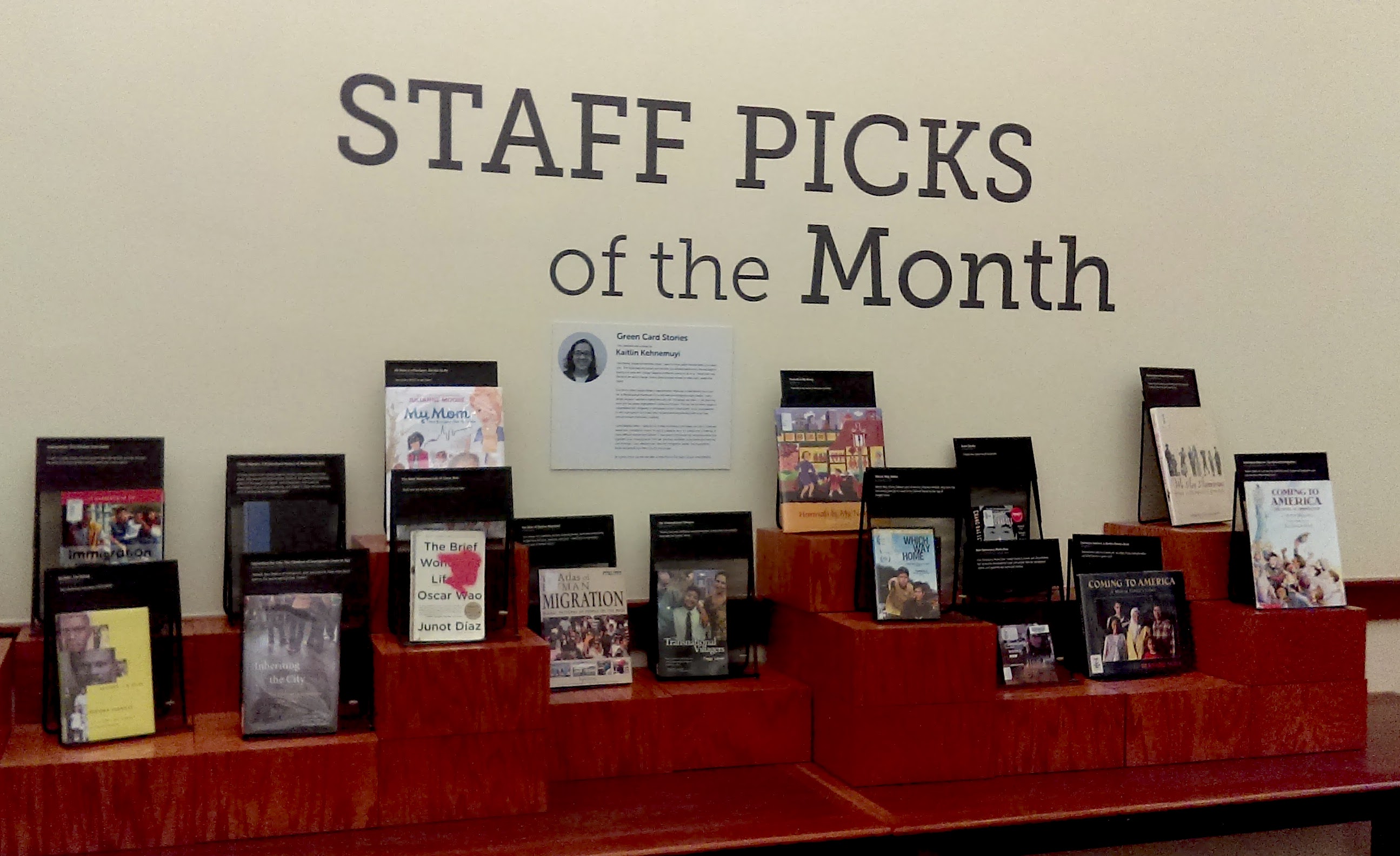
I am very pleased to have curated this month’s Staff Picks located in the Second Floor Reading Room. I based my selections around Green Card Stories. It encompasses two things I enjoy – having people tell me their stories and happenstance.
I like having people tell me their stories. I want to know about the odd items you collect (me – Pez dispensers and plants) and the jobs you worked before now. No one’s path is exactly the same and change happens at different points for all of us. The stories I love the most are about change. Stories about change remind me that I can’t predict the future.
One of my other favorite things is happenstance. Years ago a friend invited me to join her at Bluestockings downtown for a Q&A with an immigration rights lawyer. I went simply because I wanted to spend time with her. The lawyer was there to talk about her work and the people highlighted in Green Card Stories. This was the first time I began to comprehend the complexity of immigration to the United States, from the paperwork, to the court system, to ICE and other issues that immigrants deal with when they choose to leave their home countries. That talk, this book and those stories have stuck with me over the years. It has affected how I view the immigration debate and my positions. It still amazes me how books and people can affect you for a long time.
This book made me realize that immigration cannot be told as a singular story. It is a topic that is made up of many different stories each unique to the person telling it. I have picked other books by immigrant voices that highlight issues in immigration.
 kaitlin*mlk